


Yes, denture adhesive can help with eating by improving denture hold and stability.
Losing your teeth affects more than just your smile. It also affects how you can enjoy your favorite dishes. Did you just recently start using dentures? One concern that might cross your mind is whether you can still enjoy biting into an apple.
In reality, dentures require a gradual adjustment period. Dentures can be so finely crafted that chewing might cause them to move slightly. That is the main reason why it is so helpful to use a good quality denture adhesive.
Ensuring a Steady Bite
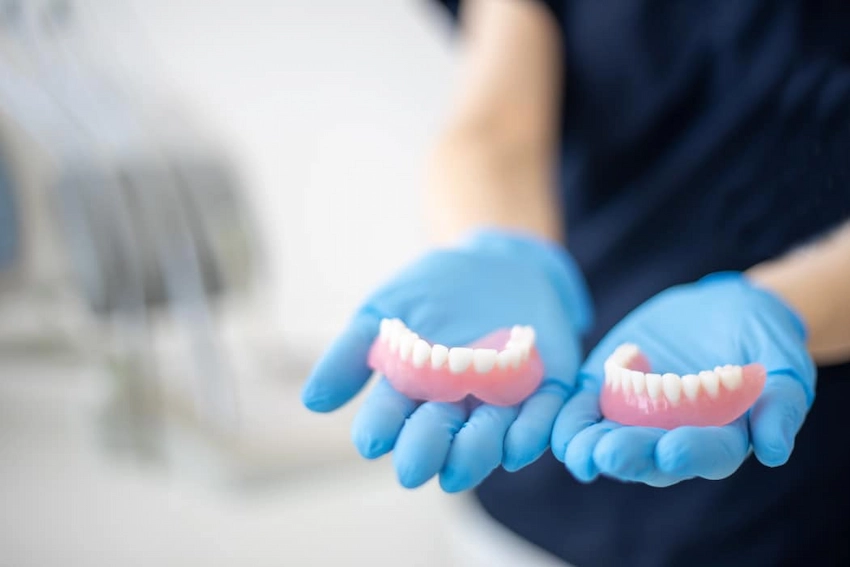
We need to understand how the mouth functions. View a denture as a saddle on a horse if put on top of the gums. When it is loose, the horse moves while it is unseated from the saddle.
With the use of a basic adhesive, things look totally different. Professor Doctor Coşkun Yıldız remarks: “The denture adhesive does more than hold the teeth. It also serves as a soft cushion for your gums.”
It is a case of very thin application of adhesive to the denture. This substance is then mixed with your saliva to seal the denture quite well.
Getting Rid of Crumbles and Food Traps
One of the frequent complaints we receive at the clinic is food particles getting entangled. Patients are particularly bothered about small seeds, such as those of strawberries, or bread crumbs that have become lodged under the acrylic plastic covering the top part of dentures. When they touch up against the gums, these food bits are like tiny little sharp stones lodged in your shoes.
Proper use of adhesive will fill all these little pockets. It functions as a thick barrier separating your soft gum tissues and the hard surface of the denture. This will prevent food from being trapped. No pain will be experienced, and you’ll begin to notice the flavor of the foods.
Re-establishing Chewing Power
The absence of actual tooth roots in the jawbone reduces biting strength severely. Dentist Polen Akkılıç and her dental assistants guide and support patients as they rediscover their confidence in the chewing process. The main benefit from using the adhesive lies in it becoming a very stable base for the denture. You can then push harder, and there would still be no problem of the bottom denture popping out.
Our patients find it a bit difficult to decide between dentures with no adhesive, dentures with adhesive, and dental implants; hence, we give them this table for comparison:
| Chewing Experience | Dentures | Dentures with Adhesive | Dental Implants |
| Bite Strength | Low | Medium | High |
| Food Barrier | Poor (gaps open up) | Great (seal blocks food) | Perfect (no gaps) |
| Confidence Level | Low | High | Complete |
| Daily Care | Clean daily | Clean and apply daily | Like natural teeth |
Your Progress in the Dental Domain

A good brand of adhesive really helps you to improve your eating habits. On the downside, it is still a short-term remedy. Eventually, as your gums recede, the bones will also be lost. The real question is when you are going to give up using a paste daily altogether?
You just might consider making yourself an ideal bite if you decide to travel to Turkey. At Lema Dental Clinic, not only are the old dentures with loose plates replaced, but so are the fixed teeth made by us, thanks to the use of implants that never come off,f and you’ll never need to make use of glue, in f,act a dentist at all, for quite a while after you get them.
Frequently Asked Questions
Does an adhesive product affect the way food tastes?
Doctor’s Answer: It shouldn’t if you choose a good one. Many old types tasted like chemicals. Nowadays, there are plenty of totally tasteless options. We advise our patients to get those which do not contain zinc and those without any flavor so their food tastes perfectly.
How long does the glue keep holding things together?
Doctor’s Answer: For the most part, the stickiness lasts until you have gone through your lunch, dinner, and maybe some tea or coffee, which makes approximately 12 hours.
Can I go for a beef steak dinner if I have a very strong denture adhesive?
Doctor’s Answer: Definitely yes, yet there is one condition to the answer. Thanks to the use of a reliable adhesive paste, your dentures remain firmly fixed in place, but in this case, you will still have to slice the meat into very small pieces and chew gently on both sides of your mouth at the same time. After a bit of practice, it becomes easy and very successful.
Is swallowing a small quantity of an adhesive paste dangerous?
Doctor’s answer: It is absolutely a safe thing to do. Small amounts naturally get washed away while eating. Please stick to the standard pea-sized dosage recommended on the package, as this will by no means harm your digestion.
Is there a way that I can eliminate my dependence on toothpaste type glue forever?
Doctor’s reply: Of course, we have that option. One such method is to install dental implants, which basically are the substitute for the real tooth roots. With their help,p you can tightly fix your teeth. We at our clinic in Turkey perform this procedure now and then, and thus the problem of needing paste-based glue will be totally gone.”
Academic References
- Bartlett, D. W., & Carter, N. E. (2017). The role of denture adhesives in the management of complete dentures: A clinical review. Journal of Prosthetic Dentistry, 118(5), 589-593.
- Coates, A. J. (2018). Masticatory performance and bite force in complete denture wearers using a zinc-free adhesive. International Journal of Prosthodontics, 31(2), 145-149.
- Felton, D., Cooper, L., Duqum, I., Minsley, G., Guckes, A., Haug, S., … & Smith, W. (2011). Evidence-based guidelines for the care and maintenance of complete dentures: a publication of the American College of Prosthodontists. Journal of the American Dental Association, 142(1), 1S-20S.
- Grasso, J. E., Rendell, J., & Gay, T. (2000). Effect of denture adhesive on the retention and stability of maxillary dentures. Journal of Prosthetic Dentistry, 83(4), 398-403.
- Polyzois, G. L., & de Baat, C. (2020). Attitudes and practices of prosthodontists regarding denture adhesives: A European survey. Gerodontology, 37(1), 50-56.

