


No, denture adhesive is not proven to cause throat cancer.
Smear the gooey, thick denture adhesive over your upper teeth first. Then apply a bit on your lower denture as well and fit both pieces over your gums and jaws, pressing gently until comfortable. It is like praying that your denture will be firmly held, and it really is not going to slip when you are having a nice meal.
This kind of situation happens to millions of humans around the world, but we are here to focus on the quiet fear of countless patients. Are you swallowing something toxic in the process? Are these denture pastes safe, or are we talking about the possible onset of a lethal disease like throat cancer?
The Cancer Question: Fact vs. Fiction
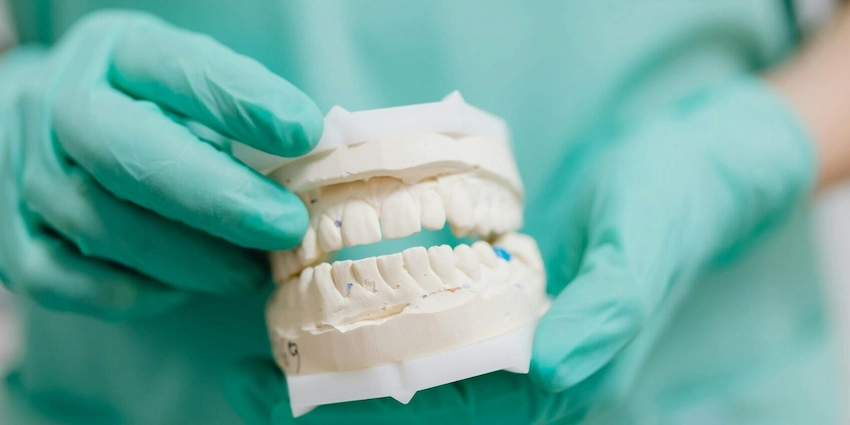
You must be very anxious to hear such a dreadful piece of speculation in case of your beloved denture adhesive. The first thing to say here is that there has never been any reliable scientific proof whatsoever that links denture adhesive with throat cancer.
In addition, the ingredients in these kinds of denture adhesives are mainly mineral oil, gum, and non-toxic polymers. If you swallow tiny portions accidentally, it is quite simple for your body to remove these materials from your digestive tract completely and harmlessly. And these substances do not cause any changes to the cells in your throat.
Your denture paste is not the reason you have cancer. But this does not give you a guarantee that those tubes of paste in your bathroom are safe at all. The bigger threat actually stems from a medical issue and not dentists’ recommendations.
Hidden Poisoning Due to Zinc
Heavy amounts of zinc have traditionally been found in some of the top-selling adhesives, which have allowed the glue to stay on a denture for a long time. Even if we all know that the zinc level in our body must not only be the right amount, but we need some zinc too for a healthy body, an overdose of zinc is likely what causes us trouble.
Think of it this way: if your blood were a playground and zinc and copper are the two sides of a seesaw. You have the right balance. Then, you start eating way more of the glue which contains the metal zinc. So, over time, you end up swallowing more of it, and it is just too heavy to stay on top of the seesaw of your system. This pushes the whole side up and down in a manner that copper’s concentration in the blood drops alarmingly low.
It all leads to a medical condition termed zinc-induced copper deficiency, of great concern. As you can expect, the symptoms closely resemble severe nerve damage:
- Loss of feeling or pins-and-needles sensation in hands or feet;
- Difficulty in walking and maintaining balance;
- Excessive fatigue, fatigue which can result in a low iron (anemia);
Professor Dr. Coşkun Yıldız notes that this is a rather common phenomenon that he witnesses during most clinical examinations. “The patients arrive scared and suspecting that they have nerve diseases. Then when the dentist inquires about their daily routine, it is discovered that the patients have been using three tubes of glue containing zinc only, and it is clear and the mystery has been solved. Instead of suffering from a disease, it is the daily denture paste that has been doing them harm.”
The Cancer Risk: Rubbery Contact
Denture paste alone does not bring about cancer. However, the main reason you have to apply more and more paste might be.
Your jawbone naturally disappears after you have lost your teeth. This can be considered the collapse of your building’s foundation under the effect of heavy floods. Your jawbone gets so small that your dental prosthetic can no longer be held in place and will eventually fall out due to its loose fit.
Let me make a metaphor that may help you understand a lot. Suppose you put on shoes two sizes larger than your feet and go for a five- or ten-mile race. Then what would you end up with? Big blisters. Now, imagine wearing that oversized shoe every day just as long as for ten years to the very end. In other words,s you will get the same kind of chronic friction injury in the mouth that your shoe gave to your foot as you keep moving in it. Such a condition, which is due to the mechanical damage from the denture rubbing constantly on your tender gum lining, is an established risk factor for developing cancer of the mouth.
Your ability even to take just one bite of the softest piece of bread is severely hindered by your inability to eat due to constant leakage of your dentures, which is the sign that they are definitely not doing their job.
Modern Remedy: Stop Using Pastes
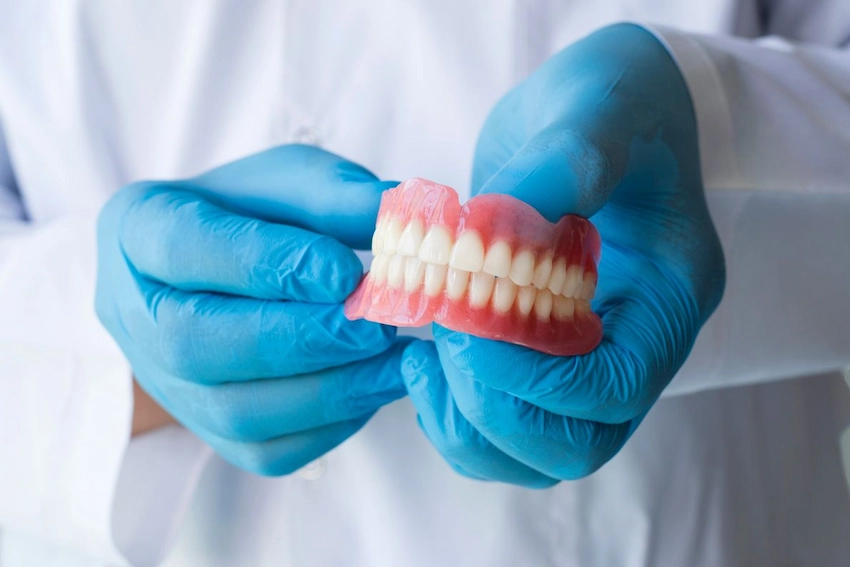
According to our observation in Lema Dental Clinic, patients who are stuck in dependency and who have to constantly purchase their denture adhesive cannot actually be solved by merely changing adhesive. It is a quick cover-up but is no good for fixing a rotten building, so to speak.
When patients come to Dentist Polen Akkılıç, she and the whole dental team have, as a matter of fact,t made it a mission to solve the problem of the patient’s oral health permanently. Chemical paste is now replaced with a method of modern biological dental treatment. We insert small titanium posts into your jaw where they will stay forever and ever as if they were roots. Then we either snap or screw the teeth onto these artificial anchors in your jawbones.
As a result, we bring your bone back to life.
After you get rid of all those toothpaste tubes and the other messy things you have to do every day, you have a totally new mouth situation. With the support of the implants, the jaw stops resorption. The soft tissue, such as the gums,s does not bleed. The mouth allows you to bite on the hardest things because you get chewing power, and you don’t care anymore about the pastes or adhesives.
Prospect for Your Future
| Attribute | Cement + Original Teeth | Implant Teeth of Lema Clinic |
| Cancer Risk | No risk from the paste. | Zero cancer risk from this treatment. |
| Poisoning by Zinc | Risk if you are an excessive user. | Not applicable since no paste is ever consumed. Therefore, no risk. |
| Jawbone | Insignificant growth and loss every year. There are no teeth to help prevent the bone loss. | The implants stimulate the bone, so it regrows to the point of being stronger and healthier than ever before. |
| Power to Bite | The very weakest – a mere 20%. | Extra strong – the strength can actually reach up to 95% that of a normal mouth bite. |
| Routine Dental Care | Hassle of applying glue and also removing it from a mess and scraping off. | Brushing just as natural teeth are done. |
Ask the Doctor: 5 Common Questions
Is it safe to swallow a tiny bit of adhesive every day?
A dentist’s opinion: It is actually harmless. If a person is careful and follows the instructions as per the dosage on the package and only takes tiny bits, the body can get rid of the tiny amount easily. However, the first risk comes with the use of large quantities of paste throughout the day when your teeth are loose and not properly placed.
How do I know if I have zinc poisoning from my paste?
Doctor’s Advice: The symptoms of deficiency caused by excessive zinc intake may also include constant weakness, muscle spasms or convulsions, and the skin getting dry and scaly to the point of peeling. In such situations, the best course of action would be to stop using adhesive that contains zinc immediately, and go for a routine check-up from your personal physician where some basic blood tests could be done.
Do loose dentures actually cause mouth cancer?
Doctor’s Answer: Yes, it is a fact that loose dentures can lead to mouth cancer, but indirectly through the continuous rubbing against delicate tissues. The risk comes from such rubbing and not from cancer-inducing plastic material. A loose denture repeatedly hits and scrapes your soft and sensitive tissues, resulting in ulcers (areas of sore and bare skin) that never fully heal for quite some time. With long years of exposure to such trauma from repeated physical injury, the healthy cells may eventually turn into cancerous ones. Having dentures that fit well is the key to not only comfort but your health too.
How fast can I get implant teeth in Turkey?
Doctor’s Answer: Very, very quickly. As soonas the patient decides to undergo the treatment at Lema Dental Clinic, we use cutting-edge techniques such as ‘Teeth in a Day.’ In this, the patient first visits, we fix the implants, and then he will go back home for temporary fixed teeth. After the gums have fully healed from the implant surgery, the patient will come back to Turkey to receive the final, permanent set of prosthetic teeth as per their needs.
Will my new implant teeth ever need glue?
Doctor’s Answer: That is a big misunderstanding. Your implant teeth get fixed to the jawbone either by bolts (a kind of screws) or by snapping into the sockets. They will not budge no matter how rough you are in the kitchen. Your eating of a nice juicy steak and biting into fruits like apples shall not be a problem,m as you will not be applying any glue to your teeth at all. You can even laugh freely without a worry about some messy residue getting stuck or even worse, ruining your look
Academic References
- Food and Drug Administration (FDA). (2021). Denture Adhesives and Zinc Toxicity. U.S. Department of Health and Human Services.
- Nations, S. P., Boyer, P. J., Love, L. A., Burritt, M. F., & Butz, J. A. (2008). Denture cream: an unusual source of excess zinc, leading to hypocupremia and neurologic disease. Neurology, 71(9), 639-643.
- Piemonte, E. D., Lazos, J. P., & Brunotto, M. (2010). Relationship between chronic trauma of the oral mucosa, oral potentially malignant disorders and oral cancer. Journal of Oral Pathology & Medicine, 39(7), 513-517.
- Awad, M. A., Lund, J. P., Shapiro, S. H., Locker, D., Klemetti, E., MacEntee, M. I., … & Feine, J. S. (2003). Oral health status and treatment satisfaction with mandibular implant overdentures and conventional dentures: a randomized clinical trial in a senior population. The International Journal of Prosthodontics, 16(4), 390-396.
- Schmalz, G., & Arenholt-Bindslev, D. (2008). Biocompatibility of Dental Materials. Springer Science & Business Media.

