


Yes, denture adhesive can cause bad breath if residue builds up or dentures are not cleaned properly.
Many people, especially those coming in for their first session at our clinic, look very shy. Usually, their first step will be to cover their mouths when speaking. These patients often show that they take great care in maintaining good dental health: they brush their teeth carefully, and they soak their dentures at night. However, despite these meticulous habits, their breath still carries an unpleasant, metal-like odor. In truth, the paste you habitually use every day can be the principal cause of bad breath.
The use of denture adhesive and bad breath has a connection. Yes, bad denture paste does make your breath stinky. A series of events occurs that is quite extraordinary.
About Oral Halitosis Science
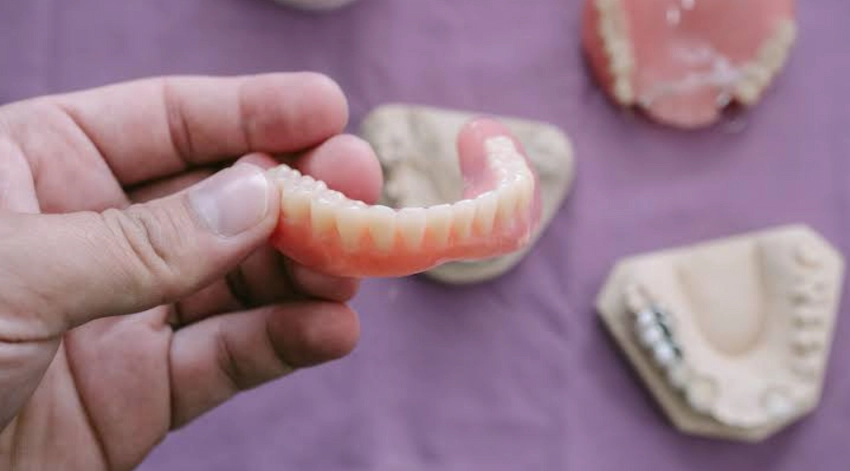
Floor is a term used when one is talking to another about a smooth and clean floor. Denture adhesive as a product is placed on the floor just like a very thick, sticky carpet. As a result of such an analogy, throughout the day you consume various foods and drinks and speak. With these actions, you are making the “carpet” wet.
One of the ways that denture adhesives work to keep teeth in place is by swelling and getting stuck. That was the case here,e as the saliva made them swell and stick. Professor Doctor Coşkun Yıldız regularly points out that this is one of the mechanisms by which such pastes work. The suction is so good that it is a great way to hold artificial teeth without any hassle. Let’s examine the matter more closely since this process has the effect of creating the paste as a very small sponge.
Bits of trapped food, sugars, and other things that have got in the oral cavity from time to time can be caught there. Mouth bacteria find their nutrients in that trapped matter. Finally, they emit foul-smelling sulfur gases. These very same gases are what lead to undesirable breath.
Odor Day-and-night Repetition
Our regular clinic scenario goes like this: patients apply extra-thick adhesive in the morning for safety reasons. By noon or so, body temperature along with saliva start softening the material. This is a decomposition process, leaving behind a kind of very unpleasant gummy coating on the gum tissue.
Many times, Dentist Polen Akkılıç and the team get calls complaining about the gummy substance on their gum that is not only difficult to remove it even from a small area. Just the faintest amount of paste is enough to leave such a mess and provide bacteria with perfect conditions for growth.
There is another source of smell in some kinds of pastes – the artificial flavors. If the flavoring substance is mixed with a sour food such as coffee or tomato sauce,ce it produces an unpleasant sour smell. Even the best quality water can’t get rid of such a sour smell.
Comparative Study: Denture Adhesives vs. Dental Implants
So after all the above, the big question is, what do we do about it? Many patients have come up with the idea not to use removable plastics anymore. Below is a simple comparison of daily denture pastes vs. implant-supported teeth as a permanent option.
| Feature | Regular Dentures (with paste) | Dental implants (supporting dentures) |
| Odor | High (food and bacteria are trapped in the paste) | Low (they mimic natural tooth function and therefore do not cause any smell) |
| Dental care daily | Scrubbing the gums every day and soaking them overnight | Brushing regularly as well as using water-pickers to keep the gums healthy |
| Chewing power | 20-30% of your chewing capacity without prosthetics | Can be up to 95% of your natural chewing power without prosthetics |
| Support of dental arch | Will lead to progressive bone loss | Skeletal integrity and bone health are enhanced by dental implants |
Some Quick Solutions to Control Denture Odors
At present, are you still relying on creams or powders as your denture adhesives?
Here are some immediate ways that can help you reduce the amount of bacteria in your mouth and thus prevent unpleasant smells:
- Get a paste free of zinc: Generally, these types of creams do not break down as much throughout the day.
- Buy a special gum brush and gently scrub your mouth with warm water. An ultra-soft brush works better. Check and make sure that no piece of the gum is left with the stuck-to surface.
- You should minimize the use of adhesive. It may seem logical that the more paste you put, the better the grip it provides. However, using a very small amount will also be adequate. The best would be to put three very small spots as it were.
Regaining Your Smile in Turkey
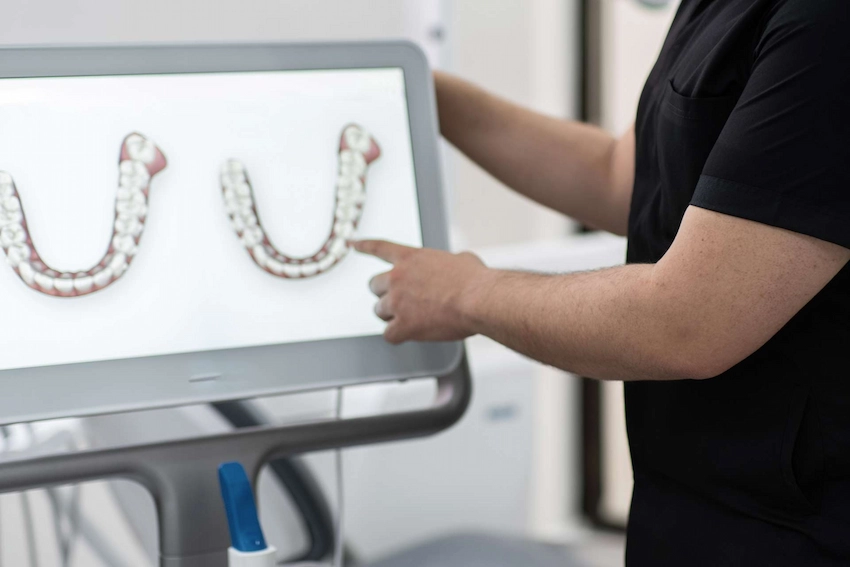
Denture pastes can cause problems when a lot of them are used, so if you have a loose denture, the paste is simply a cover-up rather than a proper fix. To give the analogy that the denture is like a house, and the bone is the foundation, if you use the denture paste to fix the denture, it is as good as using a piece of paper tape to fix a broken foundation. In no time, the house will collapse, and all the other consequences,s such as bad breath,th will appear.
Patients come to us in Turkey because they have not been dealing with the problem daily. Implants are the most advanced methods in dental restoration. By anchoring your new teeth into your jaw, our dentists get rid of the big plastic piece that would be inside your mouth. No more reliance on sticky pastes for holding your dentures.
FAQ
Is it normal for my denture paste to smell?
Past, the fact that the adhesive having some unpleasant smells is quite common. Basically, it is the result of the bacteria living on the denture paste. The denture adhesive works quite like a net in that it captures the minute bits of food, which then start rotting with no chance of getting a fresh breath.
How often should I clean the denture adhesive from my gums?
Each time the day comes to an end, the residue should be cleaned off. Do not ever be in bed with an already used-up or worn-out paste. In the process of the overnight activity, the bacteria will have about eight hours for multiplication and the production of foul smells. As a result, these bacteria will have generated unpleasant odors, and your room will be very smelly.
Will a small amount of paste be enough to prevent bad breath?
You can expect that a smaller quantity of paste will leave behind fewer hiding spaces for the bacteria, and that is exactly what a smaller quantity of paste does. At the same time, if a denture has a loose fit, naturally a person will want to keep the denture in place as much as possible by applying more paste, especially a thin layer of paste. So if there are only three small dots, but no, your dentist will fix the denture and bring it into your mouth so that it looks more natural, better, etc.
What causes bad smell if you have done everything right after denture cleaning?
Denture base material, being a kind of plastic, has an inherent structure with microscopic holes and cracks which give space to bacteria. These cracks are further widened, especially if brushing is performed carelessly and with high force. The offensive-smelling bacteria find shelter in these small craters, and the smell can’t be removed by cleaning.
What is the most appropriate solution for this case?
Dental implants are indeed the perfect alternative for patients whose dentures cause bad smells at Lema Dental Clinic in Turkey. We implement, for example, the All-on-4 or All-on-6 concepts. Basically, this technique involves placing titanium screw-like posts directly onto your jaw to support the teeth permanently. You simply need to brush them as you would regular teeth. No more using pastes, no more soaking,g and absolutely no bad smells.
Academic References
- Carlsson, G. E., & Omar, R. (2010). The future of complete dentures in oral rehabilitation. A critical review. Journal of Oral Rehabilitation, 37(2), 143-156.
- Felton, D., Cooper, L., Duqum, I., Minsley, G., Guckes, A., Haug, S., … & Sweitzer, B. (2011). Evidence-based guidelines for the care and maintenance of complete dentures. The Journal of the American Dental Association, 142, 1S-20S.
- Grasso, J. E. (2004). Denture adhesives: changing attitudes. The Journal of the American Dental Association, 135(1), 95-96.
- Kiesow, A., Sarembe, S., Pizzey, R. L., Axe, A. S., & Bradshaw, D. J. (2016). Material compatibility and antimicrobial activity of consumer products for denture care. The Journal of Prosthetic Dentistry, 115(2), 189-198.
- Zlatarić, D. K., Čelebić, A., & Valentić-Peruzović, M. (2002). The effect of removable partial dentures on periodontal health of abutment and non-abutment teeth. Journal of Periodontology, 73(2), 137-144.

