


Yes, you can use denture adhesive daily, but only in small amounts and never to fix poor fit.
Millions of people share the same morning routine. They rise from bed. They clean their face. After that, they draw a thick line of glue and glue dentures to their teeth. It’s almost like a part of the day that you don’t really consider.
Actually, it is an important indicator in terms of your health if you use denture glue every day.
Using a glue stick occasionally is not a problem. One may need assistance with a brand new set of dentures at first. But if you are constantly in need of glue, chances are your dentures no longer fit your oral condition. The following is what patients typically face if they keep on using glue at home for too long. Additionally, we will demonstrate how modern dental technology gives a much more efficient and healthier alternative.
Daily Glue Use Is Expensive in the End
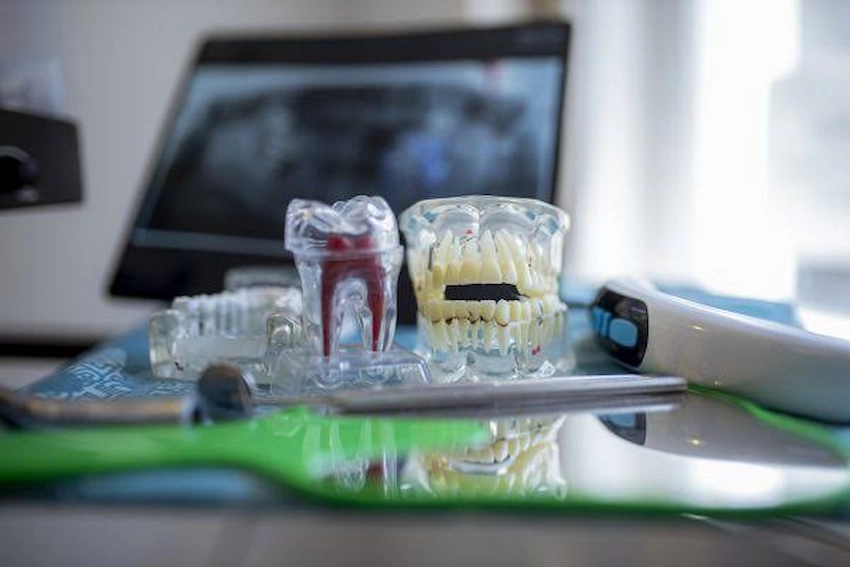
To get the reasoning behind why daily use of denture glue is unhealthy, we need to examine your underlying gum tissue.
Imagine the jawbone as the base of a house. Your healthy teeth act like firm pillars that are firmly embedded in that base. Upon each act of chewing, these roots compress the bone underneath. This is a signal from your body for the maintenance of the strength and density of the bone. After you lose your teeth, the feedback to your body to maintain bone through chewing ceases. If your mouth is no longer providing the needed stimuli, the jawbone will progressively resorb.
If bone resorption has caused your jawbone to shrink, it changes your soft tissue (gums). It means that dentures that fit perfectly two years ago may now be loose and even cause discomfort.
Glue is just a temporary fix, just like filling in your shoes with newspaper that are two sizes too big. You could get away with it for a few hours. But in the end, you will still suffer blisters and discomfort. Likewise, the “blisters” in your mouth will develop into inflamed areas such as sore,e red mouths, bleeding, and fungal infection right under the denture glue.
Rapid Warning on the Use of Dentures Containing Zinc
Many common non-prescription denture glues contain zinc. That is because zinc is the substance used to improve the grip of the paste. As long as it is in very low dosages, it is generally safe. But due to the ill-fitting of the dentures, people are encouraged to use a huge amount of denture glue throughout the day in the case of poorly fitting dentures. In this process, the user is accidentally ingesting the paste in minute amounts.
After a prolonged period, this could cause zinc poisoning. This sickness depletes the copper that your body has. It results in a loss of sensation as well as a tingling feeling in your hands and feet. You are then at a higher chance to suffer more severe consequences, such as nerve damage.
The Things Our Experts Stress to You
From our own experience treating patients at Lema Dental Clinic, we come across very frustrated patients who come exhausted due to the daily hassle of glue sticks and powders. They stopped being loud and cheerful as they feared their dentures might slip out. They are scared to eat at their favorite places where the food is a bit spicy or has a little crunch.
Prominent dentist Professor Doctor Coşkun Yıldız comments, “A denture should be used to complete your oral functions, and not as a restriction to how you conduct your life. One who adjusts his meals to the availability of the adhesive glue clearly has problems.”
Are you a person using up a glue tube quickly, like three to four dabs? If yes, you really need the professional opinion of a dentist soon.
Patient Dentistry in Turkey: The Lasting Solution
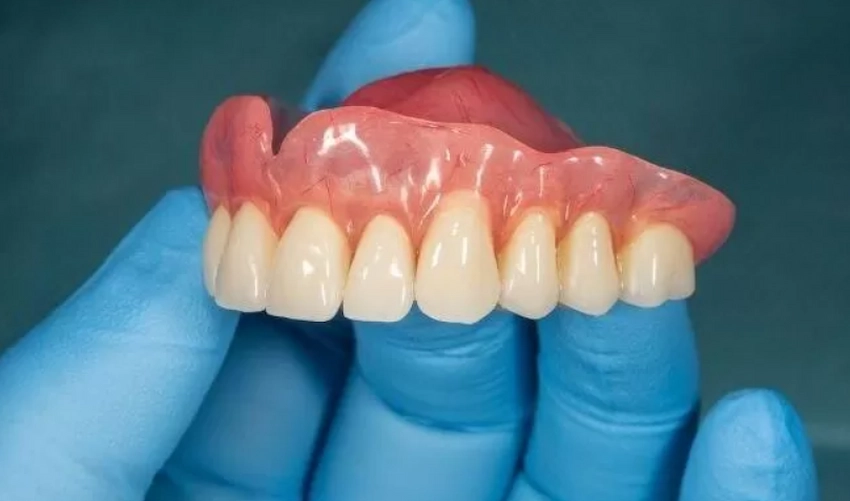
Then: if daily denture glue is bad, what is the next option?
The way of denture fitting has transformed a lot lately. At Lema Dental Clinic in Turkey, we are giving you fixed tooth implants. By doing this, you will have no need for denture glue again. With her team, Dentist Polen Akkılıç is doing miracles through innovative procedures such as All-on-4 and All-on-6 titanium implants that have transformed many patients’ lives to date. The process of tooth implants involves anchoring the artificial tooth to titanium posts that are being placed in the jaw.
These replacement teeth have been created from an individual’s model and are so natural that the person will not be sure whether they are real or artificial. As a matter of fact, with this treatment, you will forget that you even lost your natural teeth!
This solution is the only one that guarantees to prevent bone regeneration and stop your jawbone from being further affected. That’s right, you won’t have to think about your jaws getting smaller or about dentures getting loose. This is the reason why patients come to Turkey for their dental treatments – to enjoy a dental health that is not only good aesthetically but also functionally.
Dentist vs. Glue – What are the Pros & Cons?
| Feature | The traditional method involving the use of glue daily and dentures | The implant-supported dentures method (All-on-4) |
| Daytime routine | Messy and difficult to clean before bedtime | Simple brushing and off like your natural teeth |
| Strength to Bite | Weak (Hard food must be avoided) | Strong (Eating apples, nuts, and steak has become effortless) |
| Health of jaw bones | Your bone will slowly disappear | With implants, you can keep your bone healthy and dense |
| Taste and comfort | Your food’s flavor and comfort get slightly reduced | Your palate is freed up so you can enjoy the food’s taste |
Frequently Ask Questions
Is it the case that if one swallows a tiny piece of a Denture Glue a bit of a disaster to one’s body?
Doctor’s Answer: You are totally safe with the minimal quantities you ingest during regular use. When your denture is so poor-fitting that you have to use a lot of zinc-based glue to fix the denture, then the situation is different; that is, the exposure is daily for months,s which is not a normal scenario!
When is it the right way for how long the denture glue is used before we need a new one?
Doctor’s Reply: Usually, a standard tube will be more than sufficient for a three- to eight-week duration, depending on whether you have the full denture or only part of it. If you are buying a new container each week, you really may use too much. There is a great chance that your denture fit has degraded, so a new fitting is necessary for you ASAP.
Why do my dentures now feel way looser compared to they did a while ago?
Doctor’s Answer: Regular dentures come in contact with the upper parts of the gums for support, but they do not really interact with the underlying bone in a way that stimulates bone formation. This leads to the phenomenon that your bones shrink over time as your mouth slowly changes. Your denture is still the same, only your jaw bone has changed.
If I use a really strong paste, can I leave my dentures in during the night?
Doctor’s Reply: Definitely, please don’t attempt that. You should give some breathing time to your gums. Keeping your teeth in while you sleep actually means that your mucous membrane remains under a film of saliva and denture, which will become an excellent medium for the multiplication of microbes. That situation increases the risk of getting an infection of the mouth, which will be really painful, a fact that I can personally confirm from my experience. Always remove them before going to bed so your mouth can relax and recuperate.
Am I still eligible to have implants if I have lost some of my bone already?
Doctor’s Reply: Yes, in most of the cases, we have been able to place and successfully rehabilitate the bone using specialized dental implant surgery techniques at our clinic in Turkey even when the patient showed significant bone deficiency at the moment of the consultation. We also carry out a variety of techniques to preserve the residual bone while the dental implants are placed. We are very confident about our success rate of bone grafting procedures coupled with implant placements, which is why we can help patients who have been considered untreatable by others.
Academic References
- Carlsson, G. E. (2014). Responses of jawbone to pressure. Gerodontology, 31(1), 2-7.
- Magalhaes, R. F., & da Silva, J. M. (2017). Neurological dysfunction from zinc toxicity associated with denture adhesive use. Journal of Prosthetic Dentistry, 118(3), 253-256.
- Felton, D. A. (2009). Edentulism and comorbid factors. Journal of Prosthodontics, 18(2), 88-96.
- Papaspyridakos, P., Chen, C. J., Chuang, S. K., Weber, H. P., & Gallucci, G. O. (2012). A systematic review of biologic and technical complications with fixed implant rehabilitations for edentulous patients. The International Journal of Oral & Maxillofacial Implants, 27(1), 102-110.
- Zarb, G. A., Hobkirk, J. A., Eckert, S. E., & Jacob, R. F. (2013). Prosthodontic Treatment for Edentulous Patients: Complete Dentures and Implant-Supported Prostheses (13th ed.). Elsevier Mosby.

