


Yes, but denture adhesive should only be used with implant dentures if your dentist approves it.
Every day, there are lots of denture users who complain about slipping dental prostheses. You could be eating a piece of apple, or you could be laughing too much. All of a sudden, you feel and realize your denture has shifted. You have never had an easy, hassle-free denture life before – you are probably aware that the traditional solution used to be denture adhesives that are very thick and messy.
On the contrary, dental implants give stability to your beautiful smile that is free from the need to use any pastes or powders.
However, there are several things to think about regarding the fact that your implants are new. Let’s say the soft tissue around your new teeth is quite painful. Your new teeth are still loose. So can denture glue be combined with dental implants?
At our Lema Dental Clinic, this is exactly what the case is – we tell why mixing denture glue and implants is a big mistake.
Why Adhesive and Implants Do Not Mix
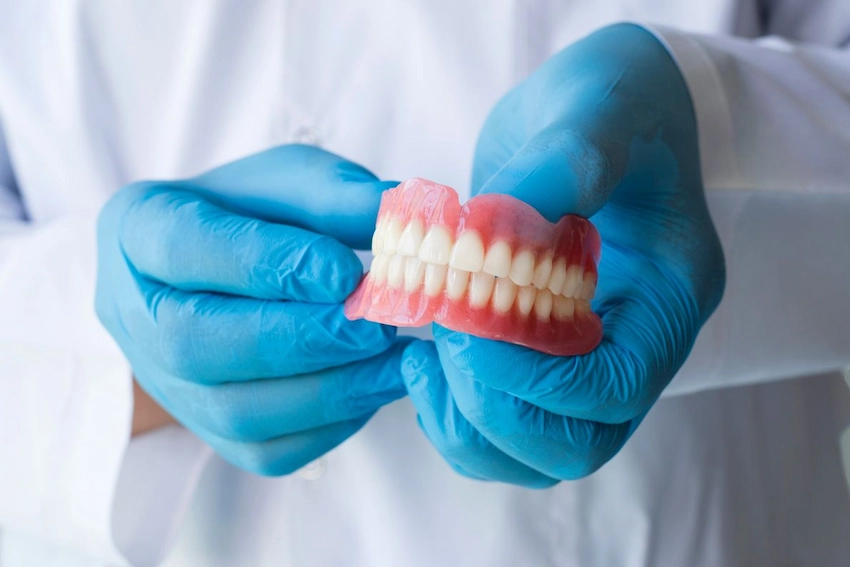
We see patients all the time who mix denture glue with their own dental implants and wonder why there are complications. Here is why these two are fundamentally incompatible with each other.
Besides your dental implants becoming natural teeth in your mouth, they are also your fake tooth roots, in a way, to a large extent.
Denture glue is like sticky superglue poured on a high-quality smart lock that you have a special matching key for. It destroys the sensitive components inside; it prevents the parts from being snapped together. To make matters worse, it becomes a breeding ground for dangerous bacteria.
The Risk to Your Healing Gums
During your initial recovery, your gums are not fully healed. If you just received your first set of implants here in Turkey, your mouth needs time to adjust.
Clinic director Prof. Dr. Coşkun Yıldız compares healing gums to a newly planted garden. They are extremely fragile. Putting chemical denture glue on this delicate tissue is a massive risk. It dumps harsh substances right onto your open surgical sites.
This single mistake can cause severe complications:
- Dangerous Infections: Harmful mouth bacteria can travel down the implant and destroy your supporting bone.
- Chemical Burns: Drugstore glues contain strong chemicals. These can burn and irritate your raw, healing gums.
- Broken Dentures: Glue easily jams the tiny implant caps. If your denture does not sit perfectly flat, biting down creates uneven pressure. This pressure can actually crack your new teeth in half.
How Perfect Your New Smile Will Be
At Lema Dental Clinic, we demand perfection. When you travel to Turkey for your care, Dentist Polen Akkılıç and her team design your smile so it never needs glue.
If your implant denture feels loose or clicks during the day, you have a mechanical problem. Never fix a mechanical problem with messy adhesive.
The tiny rubber or nylon caps inside your denture naturally wear out over time. This is completely normal. A dentist simply needs to replace these caps every 6 to 12 months.
Forget the daily paste. You just need fresh attachments.
Short version: Glue vs Implants
We are simply pointing out facts. This section highlights differences between traditional dentures and implant-supported dentures.
| Feature | Dentures with Glue | Implanted Dentures |
| Stability of the prostheses | Dentures with dental glue stick to the gum using the natural suction and glue movement of the dentures, while eating is possible. | The dentures are fixed to the jawbone. The prostheses are very stable. |
| Dentistry power | Your eating capability is increased only by about 20%. | Your chewing strength is increased up to 90%. |
| Bone | Your jawbone gets smaller every year without tooth roots. | An implant is the tooth root. It saves your jawbone. |
| Daily maintenance | You have to brush your dentures and clean them daily. | On the other hand, you can brush, floss with the water flosser, and make regular appointments with the dentist. |
| Comfort level | Glue is a taste spoiler in your food; the glue can also make a mess by spilling out the glue. | It is a sensation akin to natural teeth. The denture is free of unpleasant tastes and dirty gels. |
Frequently Asked Questions
Doctor, my implants are still healing, and my temporary denture moves. Can I use glue?
I tell all my patients to avoid glue entirely right after surgery. Your surgical incisions are still healing. If adhesive seeps into those open spaces, it can get stuck against the bone and cause a massive infection. If your temporary teeth are rubbing your gums, please call the clinic. We can adjust the soft liner inside your denture to fit perfectly without using any dangerous gels.
What happens if glue gets inside the tiny implant caps?
It becomes a magnet for harmful bacteria. The adhesive will harden inside those small metal cups. Because of this, your teeth will not click fully into place. This leaves you with an uneven bite. Biting down with uneven pressure can severely damage the dental implants underneath or literally crack your acrylic denture in half.
I’ve had my implant dentures for a year, and they feel loose. Should I use a little paste today?
Please resist the urge to use paste. If your teeth feel loose, the tiny nylon rings inside your denture have simply worn down from daily chewing. This happens to everyone. The fix is incredibly easy. A dentist can swap out the worn rings for a fresh set in just ten minutes. Your tight, secure fit will instantly return.
Will the glue damage the metal implants?
Titanium is an incredibly strong metal. The chemical glue itself will not damage the implant. However, your jawbone is in real danger. Adhesives are extremely sticky. Microscopic pieces of glue get left behind around the base of the implant. This sticky residue traps plaque. Over time, that trapped plaque will slowly destroy the bone holding your implant in place.
Will I ever need to buy denture glue again after my treatment at Lema Dental Clinic?
Never. That is the best part of our treatment process. The day you leave our clinic with your final smile, you can throw your denture paste in the trash. We use advanced dental science to secure your teeth mechanically. You are leaving the drugstore glues behind for good.
Academic References
- Misch, C. E. (2014). Dental Implant Prosthetics (2nd ed.). Elsevier Mosby.
- Zitzmann, N. U., & Marinello, C. P. (2002). Treatment outcomes of fixed or removable implant-supported prostheses in the edentulous maxilla. Part I: Patients’ assessments. The Journal of Prosthetic Dentistry, 88(2), 121-127.
- Goodacre, C. J., Bernal, G., Rungcharassaeng, K., & Kan, J. Y. (2003). Clinical complications with implants and implant prostheses. The Journal of Prosthetic Dentistry, 90(2), 121-132.
- Carlsson, G. E. (2014). Implant and root-supported overdentures: a review and some data on bone loss in edentulous jaws. Journal of Advanced Prosthodontics, 6(4), 245-252.
- Feine, J. S., Carlsson, G. E., Awad, M. A., Chehade, A., Duncan, W. J., Gizani, S., … & Thomason, J. M. (2002). The McGill consensus statement on overdentures. Mandibular two-implant overdentures as first choice standard of care for edentulous patients. Gerodontology, 19(1), 3-4.

