


Use denture adhesive once daily and avoid reapplying unless your dentist advises it.
The truth is, countless people use only a pinch of paste for dining or have a good belly laugh with their meal. Getting a good grip and holding onto things is what makes them worry-free. But let’s take a look at an extremely prevalent everyday habit. A great number of people have a little glue in their bags. They keep it on because of the fear that their teeth will fall out if their dentures are not tightly stuck to the gum.
If you’re asking, “Can you use a denture adhesive more than one time a day?”, medically speaking, the answer is no. It shouldn’t ever be necessary. In fact, repeated use might do you more harm than good.
Our many cases in Lema Dental Clinic, Turkey, have revealed that people are quite desperate for denture adhesive. A denture that keeps needing glue is like having heavy, big shoes on which you are going to do sprinting. You can tie yourself tight,t but still, the shoes would not stay on the foot.
Why Your Dentures Are Moving Around
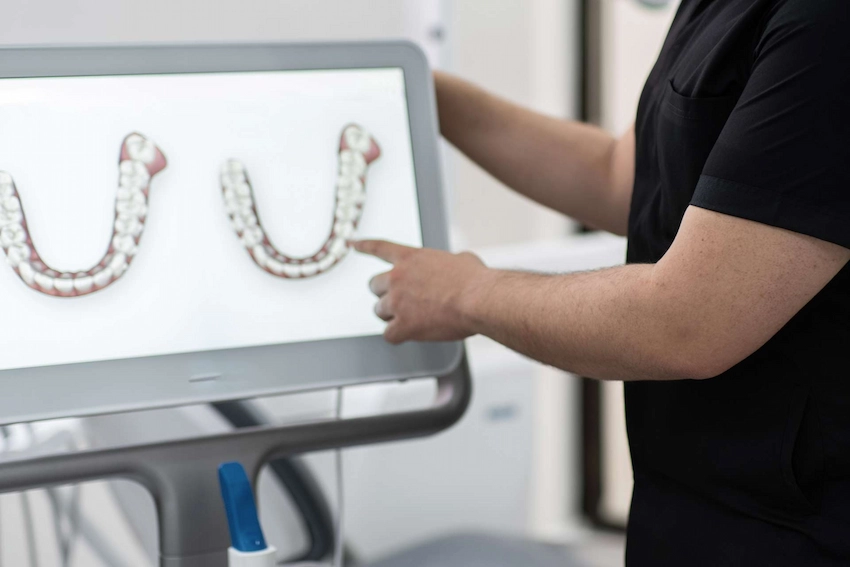
To understand why the adhesive doesn’t last until the night, it is necessary to think of your jawbone as a very sturdy home support. With your original teeth, the roots in the alveolar bone provide stimulation each time you chew. This is quite a workout for the bone, helping it stay dense and healthy when it keeps receiving such stimulation. Once you get regular dentures and lose your teeth, your denture can’t make that stimulation anymore, i. e., you will be without the workout.
With no tooth roots in place, the bone starts to lose its volume. You end up with the gum tissues getting a bit lower, making the denture seat, formerly perfectly tight, now be in a whole different, much lower level of the gums. The only question is: will you carry on with your purchase of glue, or do you make a new foundation for your teeth?
The Hidden Dangers of Repurchasing Pastes
Applying a little toothpaste once in the morning would not be harmful to your body. But if it happens again and again on the same day, then major health issues might start to take their place. Mainly, the danger comes from zinc. Store-bought pastes that contain zinc have this ingredient so that they can cling to your moist gum tissue without a problem.
Each day you put glue on three times, you end up swallowing some of it. When you swallow a large quantity of zinc over the long run, it causes a deficiency of copper in your body. This imbalance can result in irreversible nervous damage, and you may have numb feet, chronic nerve pain, and so on.
We frequently meet such patients who present symptoms like swollen and tender mucosa, indigestion due to poorly digested material, as well as the fact that they have gotten used to the fact that their dentures have fallen out.
Tight Fit vs. Glue Habit
When is the moment to stop using glue and see a dentist for help? Make an easy checklist to figure out your daily routine from the point of view of these criteria below.
| The Daily Habit | A Well-Fit Denture | A Dependence on Glue |
| Use of Denture Paste | One time daily use of paste (3-4 small dabs) | Using paste frequently; thick layers |
| Condition of the Teeth | Pink, firm mucosa; no discomfort | Red, sore, ulcerated mouth frequently |
| Dietary Habits | Chew well solid food | Only eat soft food; food gets stuck |
| Speech | Speech clear and confident | Murmuring, sounds clicking, fear of loss of teeth |
| Jaw Condition | Bone loss happens slowly and in a normal fashion | Rubber-like and sliding bone loss which is fast |
Glue Runs Out: The Last Rescuing Method in Turkey
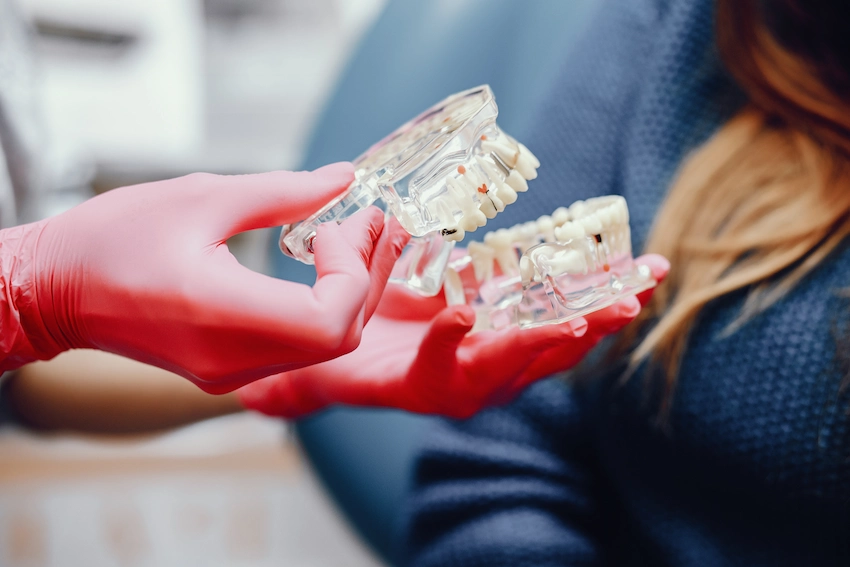
Professor Doctor Coşkun Yıldız is of the opinion that using more glue on loose dentures is a way of dodging the real problem. The problem is the deterioration of bones. The real treatment of the problem is to have a very solid base.
Dental implants are the perfect solution.
The placement of tiny titanium pegs into the jawbone will allow us to fill up the gaps. Then we attach a fixed denture. It is the kind of denture you can hardly remove even after many years, and you don’t need to put any paste ever.
Sometimes, patients are perfectly satisfied with conventional implants. On other occasions, a combination of implants with the upper jaw may provide better support and thus be better suited for you. These options offer the same excellent quality and are both equally good; they are just different tools suitable, depending on your anatomy.
Dentist Polen Akkılıç and her team are helping patients from around the world through this incredible transformation every day. It is an amazing and affordable value to get your dental implant procedures from our clinic in Turkey, to give an end not only to the problem of using messy glues but even to the daily battle.
Patient Questions
Is it okay if some paste gets ingested?
A tiny amount of denture paste accidentally swallowed now and then is harmless and very easily dealt with. The only issue is that you should not swallow too much, especially the kind of paste containing lots of zinc, as they might cause some serious health problems after repeated usage.
Please give me instructions on how to apply it so it’s longer lasting?
It goes on the less principle, meaning less is better. Start with the denture that is clean and dry. Just place a few pea-size spots at the points where you know you will stick your jaw. Make sure to never use continuous long or even very thick strips of glue. Then you put them firmly into the mouth and hold on. If the glue starts to run out of the sides, it means that you have put too much.
But the denture was so snug it could hardly breathe last year,r and now it is falling out?
You have got to understand the denture hasn’t changed, and indeed your jaw has. It is due to the fact that there are no tooth roots anymore, so the bone will slowly resorb. After that, your denture sits quite loose,e and you really do need some new professional fittings, not more paste.
May I cover the painful areas by applying glue to my teeth?
No way. Denture liner is not made with a soft rubber cushion; It is a bond of chemicals. When you apply glue on top of the area where you have an injury, it will trap all the bacteria and lead to infections and more pain. We would appreciate it if you could leave your denture and see us.
Since I completely lost my bone, what else to do?
Don’t give up yet. We have special zygomatic implants to work with you, as long as your case is complex. They don’t require bone,e but they still can be a great support to your denture, for example, by attaching themselves to your strong cheekbones, skipping the shrunk jawbone totally. You will always be offered a permanent dental solution here in Turkey.
Academic References
- Carlsson, G. E. (2014). Clinical morbidity and sequelae of treatment with complete dentures. The Journal of Prosthetic Dentistry, 111(5), 365-369.
- Felton, D. A. (2009). Edentulism and comorbid factors. Journal of Prosthodontics, 18(2), 88-96.
- Nations, S. P., Boyer, P. J., Love, L. A., Burritt, M. F., Butz, J. A., Wolfe, G. I., … & Trivedi, J. R. (2008). Denture cream: an unusual source of excess zinc, leading to hypocupremia and neurologic disease. Neurology, 71(9), 639-643.
- Polyzois, G. L., & de Baat, C. (2012). Attitudes and usage of denture adhesives by complete denture wearers: a survey in Greece and the Netherlands. Gerodontology, 29(2), e397-e404.
- Zarb, G. A., Hobkirk, J. A., Eckert, S. E., & Jacob, R. F. (2012). Prosthodontic treatment for edentulous patients: complete dentures and implant-supported prostheses (13th ed.). Elsevier Mosby.

