


Yes, denture adhesive can irritate gums or skin if overused or not cleaned properly.
It is burning. It’s itching. At times, even when you don’t speak or eat, your mouth still feels like on fire.
A lot of people silently go through the pain as they feel that it is only a small inconvenience of having dentures.
In fact, there is a completely different view of it. Soft tissues on the inside of a mouth are not made for being in constant contact with a paste all day. It is the same for the sensitive skin around the lips. If you have sore, red, and swollen gums or if there is a rash on your chin upon waking up,p you may want to consider that denture glue could be the cause.
We have witnessed countless situations like this in our clinic, and we were very impressed to find that it was actually a very popular and widespread condition. People from different countries in the world even made their way to Turkish dentistry clinics for reasons of a burning mouth. After a week of wearing the dentures and experiencing mouth sores, they are in pain and finally come to our clinic. They are the ones who have not even touched the chair yet but are already telling about the fiery redness in their mouths and how they would like to be rid of the pain.
The Science of the Sting: Why Adhesives Hurt
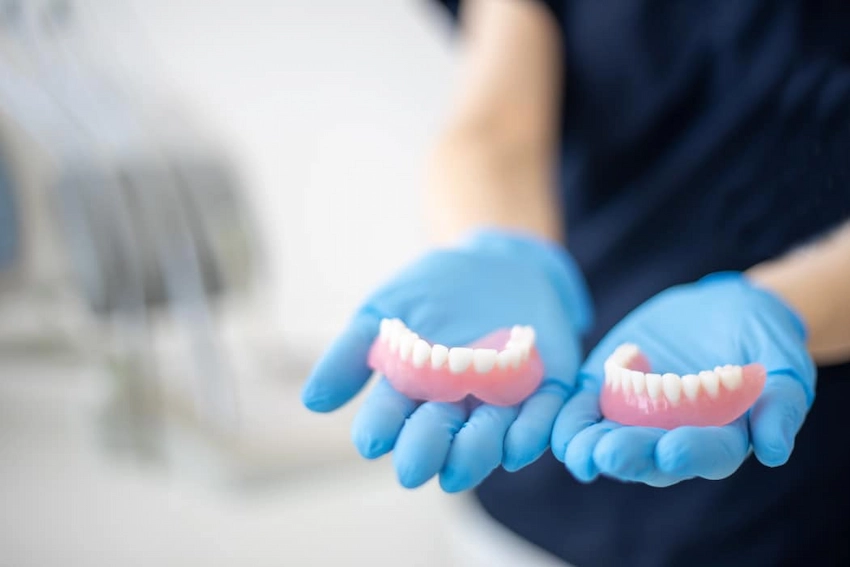
It is easier to imagine that using a glue daily on the very delicate area (your gums) is kind of similar to using a heavy and sticky chemical-based product on silk every single day and afterward putting something hard on top of it and leaving it there for 12 hours. After some time, of course, the material will suffer some kind of damage.
The skin inside your mouth is very delicate and thin. When you put denture adhesive, you put artificial plastic, colors, and preservatives right on this fragile barrier.
Allergies and Infections
Adhesives that easily accumulate in the gum area can trap the remnants of your food and bacteria. A very short amount of time is needed for a yeast infection to develop in such a place.
Let’s get a better understanding. For quite a few of us, the stinging can be attributed to a real allergy. Contact stomatitis (if it’s in your mouth) or Contact dermatitis (if it also involves your lips) is what is known to the doctors who are involved in the investigation when it is an allergic reaction. Your body’s defense mechanism identifies the adhesive, and your body is able to respond with an allergic reaction. As a result, you start to experience symptoms such as swelling, burning, redness, and peeling of the skin.
In our opinion of Lema Dental Clinic‘s daily clinical practice, we are seeing the same situation again and again. It is often remarked by Prof. Doctor Coşkun Yıldız that “Patients who get used to their adhesive have no idea of how painful it really can be. We see more damage to teeth and gums than just red gums.”
The Zinc Problem: A Hidden Danger
What is the main factor behind the stinging sensation is the question that we are still asking. In most of the cases, the reason is zinc. Adhesives are used to have a strong hold and be waterproof; that feature is usually provided by zinc.
A very small amount of zinc is perfectly safe for humans. Nevertheless, when the saliva mixes with the adhesive, one gets that bit of zinc through swallowing every day. Too much zinc that is swallowed may cause extreme sensitivity in the skin, nerve damage, and numbness in the body, which occurs after some period of time.
Finding the Fix at Lema Dental Clinic
Dentist Polen Akkılıç and her team are very much dedicated to the idea of getting their patients out of the cycle of pain. We begin with healing you when you come to our clinic. Our second and last step is making you a denture user forever so that you will never be able to buy a roll of dental adhesive again.
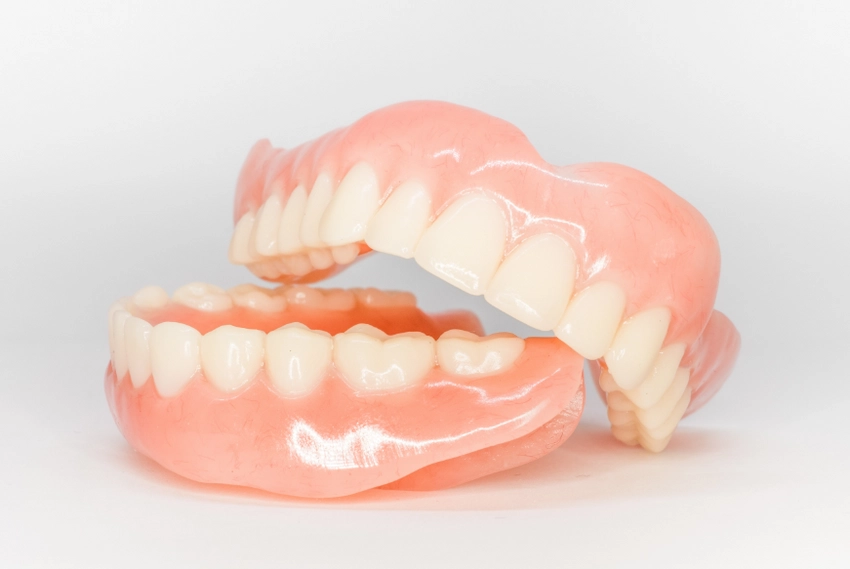
You may also imagine that your jawbone is like the concrete foundation of a building. When a person loses teeth, they also get rid of those supporting columns of a building. Without those supporting columns,s one could expect that the foundation starts shrinking right away. A normal denture just goes over this shrinking foundation so that it can be the base of the rest. However, it rubs and slips, so to stay in place, you need more adhesive.
The best medical solution is an implant-based dentist. We first put titanium roots into our patient’s jawbones (which do not get used up like the gum) and then mount their new set of teeth to these posts. Because of being fixed by the implant, they have no chance to slip or fall out. Additionally, you don’t need any chemical adhesive touching the skin anymore.
Compare Your Options
| Feature | Regular Dentures + Paste | Implant Dentures (All-on-4) |
| Gum Irritation Risk | Risk from chemicals and daily rubbing of a tooth prosthesis; very high; the skin may be burned! | No risk; the new set of teeth is supported by titanium implants and will not touch or rub against the gum tissues. |
| Ability of Bite | Only about 23% as powerful as a natural tooth bite. | About the same bite power as natural teeth. |
| The Bone Health Condition | The situation is quite bad, as the jawbone continues to shrink as long as there are no implants to replace them. | It is a great improvement because the use of dental implants keeps bones healthy and strong. Thus, they do not get smaller. |
| Personal Care | It is very time-consuming to have to put adhesive on and soak the dentures every night after use. | Simply brush the dentures the same way as natural teeth. |
Frequently Asked Questions
Why do my gums burn right after I apply adhesive?
Medical Doctor Response: The immediate pain reaction of the mouth is an indicator of an allergy. It is the chemical in the paste that is an allergen to your mouth. Continue using this brand, and the pain will become more unbearable.
Can denture adhesive cause a rash on my chin or lips?
Medical Response: Yes indeed. When you speak and eat, minute quantities of adhesive may get mixed with your saliva. The mouth corners become the point of convergence for the liquid where the adhesive chemicals have skin contact,t and that’s how the rashes of the lips and the skin are brought on.
Is there a safe amount of adhesive to use?
Medical Reply: Actually, if a person’s denture is properly made, the person should not need too much denture adhesive. There is a possibility that if one applies thick layers of adhesive to maintain the integrity of tooth replacement in the oral cavity, it is actually that such a denture no longer fits. In addition, heavy adhesive and loose dental rubbing will be the leading causes of destruction of the gum area.
How can I heal my gums right now?
It is a doctor who will give you the answer to this question: Firstly, you need to take out the false teeth from your mouth for twenty-four hours to allow your skin to rest and recuperate. Use warm salt water to gently clean your mouth 3 times per day. Do not use the denture adhesive any further; throw away your current pack of it. In case the inflammation continues to exist for more than a couple of days, you are recommended to see a dentist.
I am tired of the pain. What is the permanent fix?
The doctor says: The only permanent way to stop using gum adhesive is to permanently fixes their teeth to your jawbone. For us, at Lema Dental Clinic in Turkey, that is All-on-4 dental implants that we usually suggest. With these, you can fix new sets of teeth very tightly into the implants. You never have to touch your gums or use sticky paste ever again.
Academic References
- De Rossi, S. S., & Greenberg, M. S. (1998). Intraoral contact allergy: a literature review and case reports. The Journal of the American Dental Association, 129(10), 1435-1441.
- Francalanci, S., & Gola, M. (2000). Allergic contact stomatitis from denture adhesives. Contact Dermatitis, 43(6), 366-367.
- Nations, S. P., Boyer, P. J., Love, L. A., Burritt, M. F., Butz, J. A., Wolfe, G. I., … & Trivedi, J. R. (2008). Denture cream: an unusual source of excess zinc, leading to hypocupremia and neurologic disease. Neurology, 71(9), 639-643.
- Zarb, G. A., Hobkirk, J. A., Eckert, S., & Jacob, R. (2012). Prosthodontic treatment for edentulous patients: complete dentures and implant-supported prostheses. Elsevier Health Sciences.
- Syed, M., Chopra, R., & Sachdev, V. (2015). Allergic reactions to dental materials—a systematic review. Journal of Clinical and Diagnostic Research: JCDR, 9(10), ZE04.

