


Yes, denture adhesive can irritate the lower lip if it leaks, is overused, or dentures fit poorly.
Our dental office has seen it countless times: a fatigued patient visits, they try to hide their mouth when talking, and complain of a painful, burning (cracked) lower lip (bottom lip). In most of these cases, the cause is the cold weather; some of them blame it on spices or the sudden appearance of cold sores.
Actually, it might be something at home you’re probably unaware of.
If you’re the kind of person who’s been wearing a denture for a long while, it is very possible that what troubles you most is, as a matter of fact, the denture adhesive that you put inside your oral cavity for 12 hours a day.
We at the Lema Dental Clinic have met and examined patients who suffer chemical injuries due to the regular use of denture paste. Imagine your inner lip to be fine, delicate silk fabric. A smear of a heavy, chemical-filled paste on that skin for 12 hours a day will eventually make the silk fibers disintegrate. They would just suffocate and tear. That’s exactly what happens when we leave a denture paste smear in the mouth.
Now, we are going to look at a detailed explanation of what leads to burning and other similar symptoms from denture adhesives. And we will also reveal how one can identify the signs of irritation as well as find an ultimate solution to the problem through a thorough, painless investigation.
The Reaction of Your Skin to the Use of Denture Adhesives
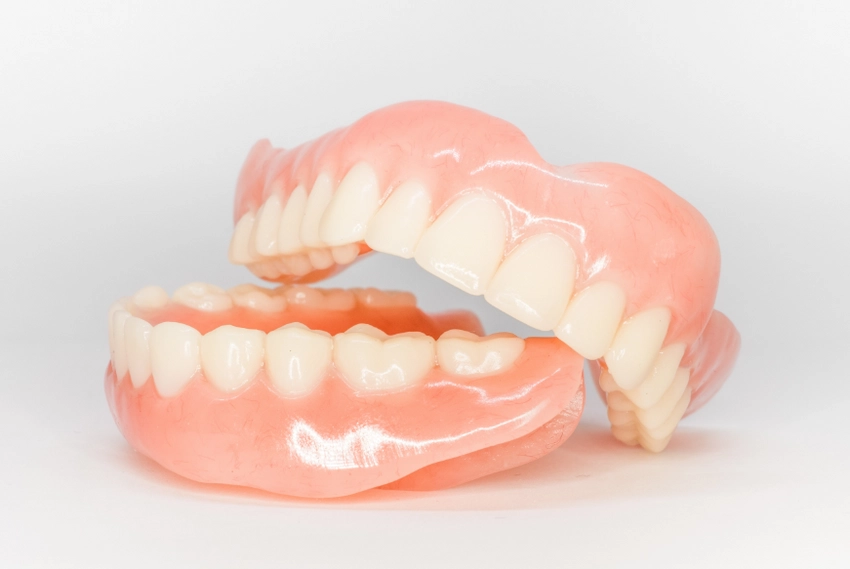
Adhesive denture products have rather an easy time of it.
On the one hand, it should hold onto the metal part very hard, which is rigid (to the denture).
The other side of the work of such products is keeping the wet, squishy (moving) area of the soft tissue of the mouth (gums) from slipping off the fixed plastic prosthetic appliance.
Thus, it was only natural that the companies that make the paste, the glue, and the powder to which you put the denture decided to use very powerful (possibly harmful) chemicals to be included in the ingredients list. In the denture adhesive products, you get synthetic resins (binders) and heavy petroleum-based thickeners (the gelfy ones) in addition to the metal components such as zinc.
Professor Coşkun Yıldız quite regularly explains these matters in a very simple and accessible form so the patients can easily take the explanation away. For instance, “the inner layer at the upper lip is very similar to a dry sponge, which is a very absorbent surface,” says the doctor. So, any contact that it has with it, it will be completely absorbed. When some very aggressive (and strong) substances are left to contact the sponge-like inner lining of the upper lip for several prolonged periods or even continuously for a long time, then your body is going to defend itself by the formation of inflammation, such as a swollen area. This is actually the self-help mechanism which the body uses to safeguard the vulnerable skin of the lip area against damage.”
Why Your Lower Lip Suffers Most?
That is, perhaps, a question to one of the most commonly reported symptoms among denture wearers – your lower lip feels a burning sensation while your upper lip feels okay. The main reasons for that are gravity and saliva.
As you are eating something or speaking, a bit more than normal amount of denture glue is squashed out from beneath the lower plate. The natural gravity pulls your saliva down until it reaches the back part of your oral cavity (the mouth) and mixes with the chemical glue. Every time you speak, it washes this strongly soapy mixture directly against your very delicate lower lip.
Recognizing the Signs of Rejection by the Adhesive
Burning, swelling, and skin damage can be indicators of an adverse chemical reaction. If your body is rejecting your denture adhesive in a chemical sense, you can watch out for these very telling signs:
- Burning sensation all of a sudden: You get a sharp pain right after putting fresh glue on or after biting into something sour like tomatoes.
- Redness and swelling: You can see it is angry – bright red and puffy – on the inside of your lip.
- Flaky skin: This is the first sign your body is reacting, as the top layers of skin begin to separate and shed out in pieces.
- Getting cracks at the corners: You feel very uncomfortable speaking when you can see open sores at the corners of your mouth caused by the dripping saliva.
Putting an End to the Problem by Getting to the Roots
Most of our patients at the clinic change their glue brands when it happens to them, go in search of a zinc-free paste, or, if they have been using paste, use cushion strips, or, if they are using the old-fashioned glue, the powder.
Honestly? Changing products in these ways only serves to address the symptoms while leaving the real cause, which lies elsewhere, re to continue its mischief in your mouth!
Need for more glue implies your jaw is shrinking. To help you see this, imagine that you have built a house on ground that shifts or sinks; the floor of your house is never stable (so there is a lot of movement in the basement), and in addition, the upper floors are not well fixed (so the upper level is the unstable floor). So, the denture just cannot keep from slipping and moving around the mouth. That is why you always need more glue to hold onto the denture.
What we generally observe is the differences in comfort, aesthetics, and function of conventional dentures compared with the implant-supported, so-called “teeth in a day” solutions.
| Feature | Old (glued) Dentures | New Generation Teeth In A Day (All-on-4/6) Implant Dentures |
| Chemical Burn | You will be in pain every day due to exposure. | We do not even use glue or a paste for this type of denture! |
| Gum Health | The gums will become inflamed and very sensitive. | If you use our method, your gums remain soft pink. |
| Bite Force | Only about 30 percent of the original bite strength. | Getting up to 90 percent of the chewing force. |
| Dental Bone | The shrinkage of your dental bone over time will be the consequence of wearing conventional dentures. | Titanium posts in our implants help keep your jawbone firm. |
Finding Permanent Comfort at Lema Dental Clinic
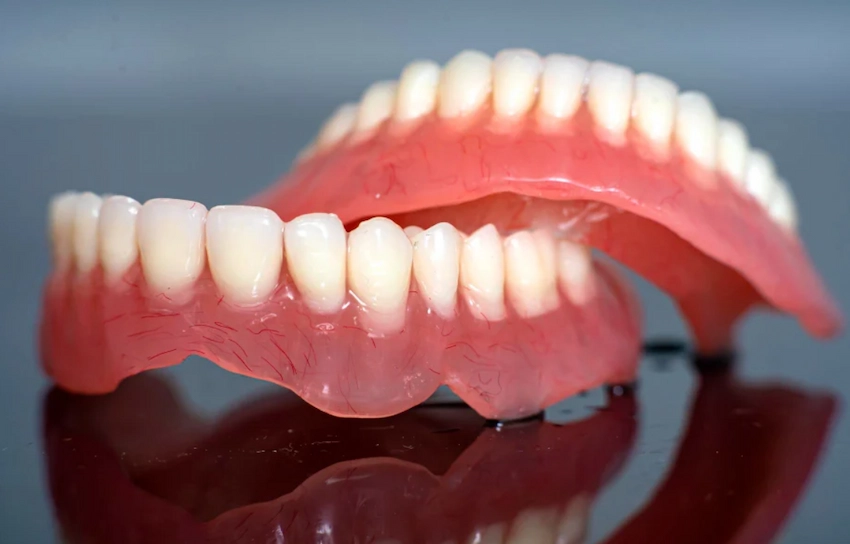
With a healthy and natural mouth, one can enjoy eating various types of food and also have confidence in his/her smile.
Dentist Polen Akkılıç and her team truly enjoy the moments of helping patients who have been suffering for quite a long time to get rid of messy glues for good. Our highly qualified team is always willing and ready to support our beloved patients in all their dental-related queries and treatments.
Each and every year, we witness thousands of patients visiting our state-of-the-art clinic in Turkey for a perfect denture fix that lasts forever. Denture implants using the All-on-4 or All-on-6 techniques are very popular among the patients. In fact, with this approach, we are able to provide fixed teeth that have the stability of a natural tooth by anchoring them into the bone at strategic points. So it’s a win-win on the aesthetics and functionality fronts.
As a result, you’ll never see your teeth get moved around or fall out again. Your mouth is open; you won’t have any more sores and will be able to bite your apple and talk like a normal, healthy person. It’s the same as if you were back to chewing with your real dentition again, isn’t it?
Denture Wearers Common Questions
Why does the glue I use burn my lip suddenly?
Dr. Response: It’s very common. Your body may suddenly turn into a new allergytot some chemicals and start showing symptoms, though the exposure is not really dangerous in the first place. Also, the brands may change glue formulas without informing the consumer.
Does the high content of zinc in denture cream really cause mouth sores?
Dr. Response. Yes indeed! High levels of zinc can burn the soft tissue in your mouth easily, by literally eating away the protective layer of the skin (epidermis). The result is painful sores on your lower lip and gums.
Will natural denture glues be better?
Dr. Response: Pastes made of aloe vera or pine resin are much more gentle to the skin of your lips and cheeks and will not cause burns. However, the problem is they generally don’t last long. So, your teeth might get moved by you, and you would be really upset.
How can I make the burning of my lower mouth feel better as fast as possible?
Doctor. First of all, just quit using glue for a moment. Take warm salt water and rinse your mouth three or four times per day to soothe the inflammation (inflamed tissue). Give your mouth the chance to get rid of the denture as much as possible in a day so your lips can heal. But keep in mind that if the sores don’t go away within a few days, come and have a look at you with our team.
Could it be that after dentures, I wouldn’t have to use glue ever again?
Doctor’s response:“Oh, of course! It is our biggest happiness and pride that we can advise patients to throw their glue away in the trash and say bye to that mess forever. Actually, with dental implants, we fix your teeth in place using strong titanium posts which act as an anchor and hold the whole prosthesis in. The new tooth feels exactly like your natural teeth, so you can really enjoy everything again!
Academic References
- Coelho, C. M., & Zucoloto, S. (2009). Denture stomatitis and contact allergic reactions to denture base materials and adhesives. Journal of Prosthetic Dentistry, 101(2), 123-129.
- Sharma, P., & Sharma, A. (2015). Allergic contact stomatitis from denture adhesives: A clinical challenge. Journal of Clinical and Experimental Dentistry, 7(4), e548-e551.
- Felton, D., Cooper, L., Duqum, I., Minsley, G., Guckes, A., Haug, S., … & Houston, M. (2011). Evidence-based guidelines for the care and maintenance of complete dentures. Journal of the American Dental Association, 142(1), 1S-20S.
- Kotsiomiti, E., Chrysomali, E., & Siciliano, J. (2020). Mucosal reactions to denture adhesives: A systematic review of the literature. Gerodontology, 37(1), 12-19.
- Zarb, G. A., Hobkirk, J. A., Eckert, S. E., & Jacob, R. F. (2013). Prosthodontic Treatment for Edentulous Patients: Complete Dentures and Implant-Supported Prostheses (13th ed.). Elsevier Mosby.

