


Alveoloplasty reshapes jawbone for better dentures, implants, or healing.
When you are lying on the dental chair, your main thought is to have a very nice smile that is also healthy. It is quite logical. But a good-looking smile must be supported by a very strong foundation. Consider your jawbone as the base of a tall building. You cannot expect a safe house from bumpy ground.
It is precisely where we come in and offer assistance via alveoloplasty.
We sometimes also refer to it as jawbone reshaping. It is an extremely mild and short operation that just removes the rough and sharp parts of the bones that have been left behind when teeth are removed. Through our work at Lema Dental Clinic, Turkey, this is one of the factors that makes us deliver excellent results consistently.
Under What Circumstances is Alveoloplasty really a Must?
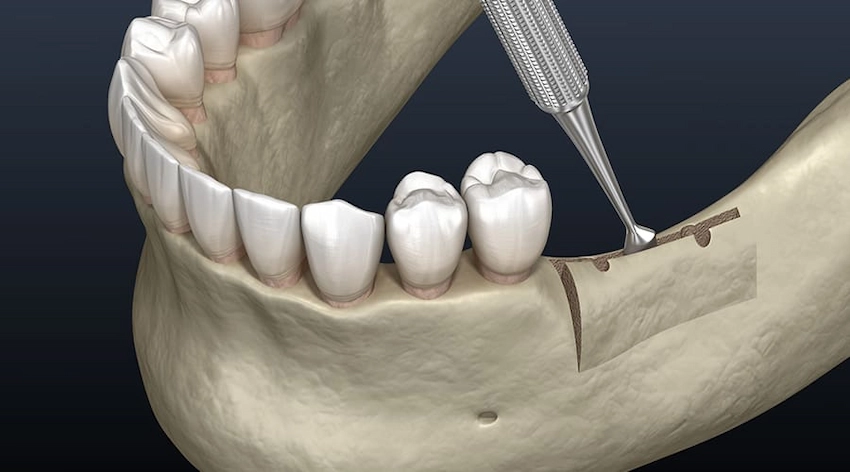
The fact is that even after tooth extraction not the whole area heals perfectly. Usually, a gap with some sharp edges and depressions in the healing bone will be present.
- Denture patients benefit from alveoloplasty as the ridges of the alveolus prevent a proper denture fit. If you imagine placing a thin mattress over rough ground, you can guess that it would be impossible to have a good sleep. For your denture cushion to work efficiently, you require your jawbone to present a smooth surface in such a way that they make your face look naturally beautiful without having a loose appearance. Sharp bone edges left unrounded would cause a painful rubbing of the skin when you wear dentures.
- Dental implants can only thrive within a wide flat bed of a healthy supporting bone. Flattening and leveling the ridge helps us position the titanium fixture securely.
- Natural bumps: some people naturally develop such bumps. A smoothing operation would help them chew and pronounce words better.
Professor Coşkun Yıldız frequently comments, “A nice set of teeth is no more than a pretty facade, unless the bone underneath is strong and properly shaped. It is like painting a wall without prior sanding.”
Procedure: What Exactly the Doctors Do
Lots of people don’t like the word ‘bone contouring‘ and start to worry. However, the process in general is actually a very straightforward, safe method. We perform it quite often right after extraction of a tooth. First of all, your local anesthetic ensures that you are fully numbed, which means you are insensitive to pain. Then the surgeon will lift the gum to expose the bone.
With the aid of specialized tools, the doctor smooths the jagged edges. Just think of a wood sculptor smoothing down the edges of an irregular piece of wood.
Afterward, the doctor washes the area properly. After having your tooth removed, a surgeon does a small operation where he reshapes the ridge to make it flat and smooth again, which would allow you to comfortably wear your denture or implant afterwards. Once ready, the gum is then sewn over very carefully and securely.
Treatment Time Scale
| Treatment Phase | The Purpose of This Step | Duration in Time |
| Tooth Removal | Removing the teeth that are not repairable or damaged | 30-45 min |
| Alveoloplasty | Dulling the rough bone edges | 15-30 min |
| Gum Healing | Soft tissue to seal and recover | 1-2 weeks |
| Bone Healing | Preparation of the bone to accept future implants | 3-6 months |
After Surgery: Take Care of Your New Smile
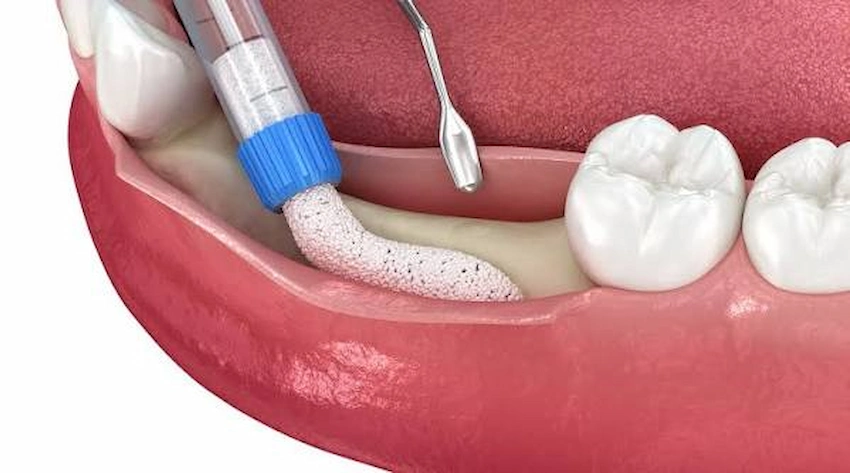
Surgery is the first phase. Good recovery is key to having your new teeth for a long time. In our experience, the patients who strictly follow the doctors’ advice can expect quick healing. Dentist Polen Akkılıç and her team always recommend a soft recovery program. Apply an ice pack to reduce the swelling for the first 2-3 days. Eat only soft foods like yogurt, hot soup, or smoothies, and do not use straws,s as drinking from a straw could dislodge the blood clot that protects your healing wounds. Also, don’t spit forcefully or rinse thoroughly. Just let a few tablespoons of warm saltwater stay in your mouth, swirl it for a minute, and then allow it to come out through the natural drains.
The big question is still whether you will be able to get used to the situation quickly. In general, most patients feel very good after a few days. It will be the doctor who prescribes you regular postoperative pain medications together with a prescribed anti -inflammatory drug program, so there will be absolutely no reason to fear the development of secondary infection.
Common Questions
Does alveoloplasty cause pain at all?
This question really needs no answer. Don’t be afraid of pain at the time of operation,n for which you will be completely numb. Maybe you can slightly sense something like a touch or slight pressure, re but that won’t be sharp pain. Later at home, you will feel some discomfort, but the medicines which we provide will assist you a great deal.
When I pull my tooth, do I have to carry out bone reshaping as well?
Definitely,y a good time to combine the procedures is when we remove the tooth. You wouldn’t have to go for a surgical intervention twice. The benefit will also be an accelerated overall recovery time.
Is jawbone reshaping really a must for me to have teeth?
Undoubtedly, it is the one. We shall not put artificial teeth on a ground that has lots of little rough pieces underneath.
When will it be that I’ll have my real teeth?
Your gums will be able to close up within one or two weeks after your appointment, and your stitches will be removed. However, your jawbone will need to heal further to become sufficiently hard and solid. It is common for us to wait about three or six months before the placement of teeth.
Why take my teeth out in Turkey?
You can rely on our team of world-class dentists with up-to-the-minute CT technology and 3D imaging, and we ensure your safety throughout the procedure at every phase. In Lema Dental Clinic, you’re treated for the cost of about 1/2 of your dentist fees at a clinic in the USA or Europe. And yet you will have a luxury holiday.
References
- Al-Sabbagh, M. (2015). Complications in Implant Dentistry. Dental Clinics of North America, 59(1), 1-24.
- Hupp, J. R., Ellis, E., & Tucker, M. R. (2019). Contemporary Oral and Maxillofacial Surgery (7th ed.). Elsevier.
- Misch, C. E. (2014). Dental Implant Prosthetics (2nd ed.). Mosby.
- Pagni, G., Pellegrini, G., Giannobile, W. V., & Rasperini, G. (2012). Postextraction Alveolar Ridge Preservation: Biological Basis and Treatments. International Journal of Dentistry, 2012, 151030.
- Wang, H. L., & Boyapati, L. (2006). “PASS” principles for predictable bone regeneration. Implant Dentistry, 15(1), 8-17.

